
I Used To Be Against AI. I Was Wrong.
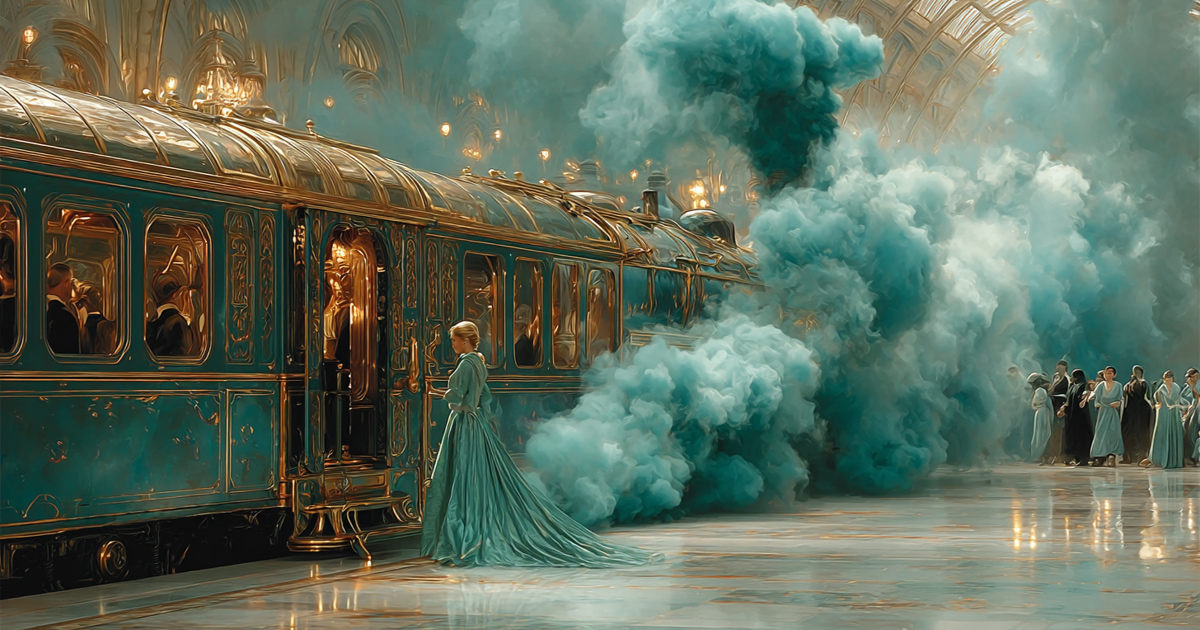
The train is leaving whether or not we choose to get on. ✨
The AI conversation is everywhere and many people are overwhelmed, angry, intrigued, or afraid. This post is for the ones who are curious. How a skeptical writer went from “absolutely not” to building something beautiful with the very tools she feared, and why getting on the train might be the most human thing you can do.
As a writer, the idea horrified me.
AI-generated words were soulless and generic, a betrayal of everything 12-year-old me dreamed about when my English teacher said I had a gift for words, and of everything I’d spent decades honing. I’d built a career on the belief that language, real language, comes from a human being with something to say. Anything otherwise was preposterous. And now some algorithm was going to do it better.
In the words of a special toddler in my life as he dramatically waves off his mother’s insistence on the latest hated vegetable: “No, no thank you.”
And the images? Don’t even get me started. Fake, plastic, and manufactured, a shortcut for people who couldn’t be bothered to hire a real photographer or illustrator.
I was very sure about all of this.
Then I met Jenna Soard.
✨ ⋅ ✨ ⋅ ✨
Almost two years ago, when the Instagram gods realized I was interested in creative side gigs, I stumbled onto her Secret AI Society (SAIS) course. I was intrigued by what she had to say. I’ve always been curious about innovation and learning new ways of doing things (it’s practically a character defect), but I was also skeptical. What I discovered there dismantled (almost) every objection I had.
Jenna, the former lead designer at Nike, didn’t talk about AI as a replacement for human creativity. She talked about it as a tool for enhancing imagination and for elevation, not fakeness or imitation. It’s the chance to step into a more fully realized version of yourself you’ve probably been envisioning, like a epic photoshoot on a good hair day.
She shared a story about a man who used AI imagery to create a vision of his elevated self: healthier, more vital, more athletic, more alive. It wasn’t a fantasy or a lie. It was the same principle behind every vision board ever created, except instead of cutting his face out of a printed favorite selfie photo and gluing it on to a magazine body (guilty, circa 2003 😉), he could see himself as the reality of who he was stepping into.
Within a year, he became that version of himself.
I felt something shift.
✨ ⋅ ✨ ⋅ ✨
Because, with more than two decades of facilitating vision board workshops and studying consciousness work, I know that we move forward to what we can see. Neuroscience backs this up. Your reticular activation system (RAS) filters reality based on what you’ve primed it to notice. Show your brain an image of possibility often enough, and it starts finding pathways toward it that were invisible before.
So how is an AI-generated version of your elevated self any different from a vision board image?
It isn’t, except that it’s more powersonal, and more powerful.
That was my ah-ha.
✨ ⋅ ✨ ⋅ ✨
In the middle of the hotly-debated AI conversation, I’ve been thinking a lot about the people who stood on the platform as the train pulled away: the photographers who were furious about Photoshop, the scribes who feared the printing press, the craftsmen who raged against the Industrial Revolution. Every single technological leap in human history has been met with the same fear that this will ruin everything.
And every single time, it didn’t.
Photoshop didn’t kill photography. It created new professions within graphic design. The printing press democratized knowledge instead of destroying it, and the Industrial Revolution redirected human creativity instead of ending it.
AI will not replace the humans who have something real to say. It will, however, leave behind the ones who refuse to get on the train.
I choose to get on.

✨ ⋅ ✨ ⋅ ✨
Here’s what I’ve created since I stopped being afraid.
Somewhere between late nights troubleshooting ShowIt (we had words 😅) and stitching together images across five different tools, something started to take shape: a website with presence, and content with a voice.
A brand communications studio I built from scratch, rooted in strategy, storytelling, and AI-powered imagery for women standing at the threshold of reinvention, with a lead magnet, an email sequence, a blog, my body of work in the world.
All of it within a few months, after a corporate layoff with a few thousand of my closest friends finally cleared my runway and dared me to use the space.
I probably could have done some of this without AI. All of it, at this speed, with this level of this polish, on this budget? Not even close.
AI gave me space to birth something new, not to be replaced.
✨ ⋅ ✨ ⋅ ✨
I’ll be honest with you. I’m not going to pretend this season has been easy, or spiritually bypass it. Every single aspect of my life has blown up spectacularly around the same time.
There have been tears. There’s been the dazzling, profanity-laced kind of anger at the universe, screamed at the sky when it all gets to be too much. There have been moments of barely treading water while the next challenge arrives before I’ve caught my breath from the last one. Life whack-a-mole.
And somewhere on the other side of it all is… the primordial soup of potentiality. This feeling of having to surrender so completely to whatever cosmic force is in charge of our destiny so that something entirely new becomes possible.
I used to teach this to my kids when they were younger: think about the universe as a giant cosmic waiter. You walk into the universal coffee shop and say “I want a coffee.” It hands you back a plain black coffee. You say that’s not what you wanted. It says, “You didn’t ask for more.” You hem and haw through 182 syrup options, debating every angle. The universe waits, patiently, infinitely.
And when it clicks you finally say: “A grande extra hot toasted vanilla latte with organic oatmilk, one pump of lavender, extra whipped cream, and sprinkles – and a straw.”
Now we’re getting somewhere.
At their best, AI tools help us dream bigger. They show us visions of what’s possible before we have the words for it. They let us see that elevated version of ourselves so our brains can start finding the neural pathways to get us there.
They help us place the order.
✨ ⋅ ✨ ⋅ ✨
I’m not naive about AI’s shadow side. I care deeply about this planet (Greenpeace card-carrying member, thank you very much), and the sustainability questions around AI are real and very much worth debating. The ethics and morale compass of the tech-bros-in-charge and guardrails matter tremendously. The job displacement is real (👋). These are conversations we must keep having.
And also, every tool in human history has carried that same duality, from fire to the printing press to the internet. We didn’t stop using them. We learned to use them better.
Like anything, AI can be used for good or not.
I choose the good.
✨ ⋅ ✨ ⋅ ✨
We are, as many spiritual teachers have said, eternal creative beings, meant to grown and evolve and change. Change is uncomfortable, sometimes excruciatingly so, especially when the very fabric of your reality, everything you’ve worked so hard to build, is suddenly up for renegotiation.
But on the other side of that discomfort is a version of yourself you haven’t met yet, one that’s wiser, clearer, elevated, and ultimately transformed.
The train is leaving.
You can wave your hankie from the platform as it pulls away, or you can get on.
I’ll save you a seat. ✨
All aboard, 🚂 🤖 ✨
~Ren
✨ ⋅ ✨ ⋅ ✨ + ✨ ⋅ ✨ ⋅ ✨ + ✨ ⋅ ✨ ⋅ ✨ + ✨ ⋅ ✨ ⋅ ✨ + ✨ ⋅ ✨ ⋅ ✨ + ✨ ⋅ ✨ ⋅ ✨ + ✨ ⋅ ✨ ⋅ ✨
Florence (Ren) Yaeger, Copywriter & Brand Strategist | Starstuff Studio | starstuff.studio
ren@starstuff.studio

Be the first to comment